


Your oxygen needs shouldn’t keep you from exercising your right to vote. Here’s how to plan ahead, avoid long lines, and understand your rights if you need accommodations at the polls.
Voting is an important way to make your voice heard, but for people living with COPD, chronic respiratory conditions, or other breathing difficulties, getting to the polls can sometimes present extra challenges.
Long lines, standing for extended periods, crowded indoor spaces, changing weather, and the physical effort of getting to and from a polling location can make voting more difficult for oxygen users.
The good news is that you have options. Voting by mail, taking advantage of early voting, and understanding your rights under the Americans with Disabilities Act (ADA) can help make the experience easier.
Whether you use a portable oxygen concentrator (POC), a stationary oxygen concentrator, or supplemental oxygen around the clock, a little preparation can go a long way.
Here are some helpful tips to make voting more comfortable and manageable.
1. Consider voting by mail
For many oxygen users, voting by mail is one of the easiest ways to avoid the physical demands of going to a polling location.
You can complete your ballot at home, at your own pace, without worrying about standing in line, finding accessible parking, or carrying your oxygen equipment through a crowded building.
Benefits of voting by mail include:
- No waiting in long lines: You can complete your ballot whenever you feel comfortable.
- Stay in your oxygen routine: You don’t have to adjust your oxygen schedule or worry about conserving battery power while away from home.
- Avoid unnecessary physical exertion: There’s no need to walk long distances or stand for extended periods.
- Take your time: You can review your choices carefully without feeling rushed.
- Reduce exposure to crowds: Staying home may be preferable if respiratory infections or poor air quality are a concern.
A few tips for voting by mail:
- Check your state’s election website to find out how to request a mail-in ballot or whether one is automatically sent to registered voters.
- Read the ballot instructions carefully, including any requirements for signatures or witnesses.
- Complete your ballot and return it before your state’s deadline.
- Check whether your state offers secure ballot drop boxes or in-person ballot return locations.
- If available, use your state’s ballot-tracking service to confirm that your ballot was received and accepted.
One important reminder: Some states count ballots based on when they are received, not when they are postmarked. Don’t wait until the last minute to return your ballot.
If you need assistance marking or returning your ballot because of a disability, federal law provides important protections. You may be entitled to assistance from a person of your choosing.
The U.S. Election Assistance Commission has additional information about accessible voting by mail.
2. Take advantage of early voting
If you prefer voting in person, early voting can be a great alternative to waiting until Election Day.
Many states offer in-person early voting at designated polling places, election offices, or vote centers. Depending on your location, you may have several days or even weeks to cast your ballot before Election Day.
Why consider voting early?
- You may encounter shorter lines than on Election Day.
- You have more flexibility to choose a day when you’re feeling well.
- You can avoid the last-minute rush.
- You have more time to arrange transportation or assistance.
- You can choose a time of day when your breathing and energy levels are typically better.
Tips for planning an early voting trip:
- Check your local election office’s website for early voting dates, hours, and locations.
- Call ahead to ask about accessible parking, seating, and other accommodations.
- Choose a time when you generally have the most energy.
- Bring your portable oxygen concentrator and a fully charged backup battery if you use one.
- Consider bringing someone along if you need help with transportation or navigating the polling location.
Remember that early voting locations and hours may differ from your regular Election Day polling place. Check before heading out.
You can find your state’s official voting information through the U.S. Election Assistance Commission.
3. What if you go on Election Day and the lines are long? Know your ADA rights!
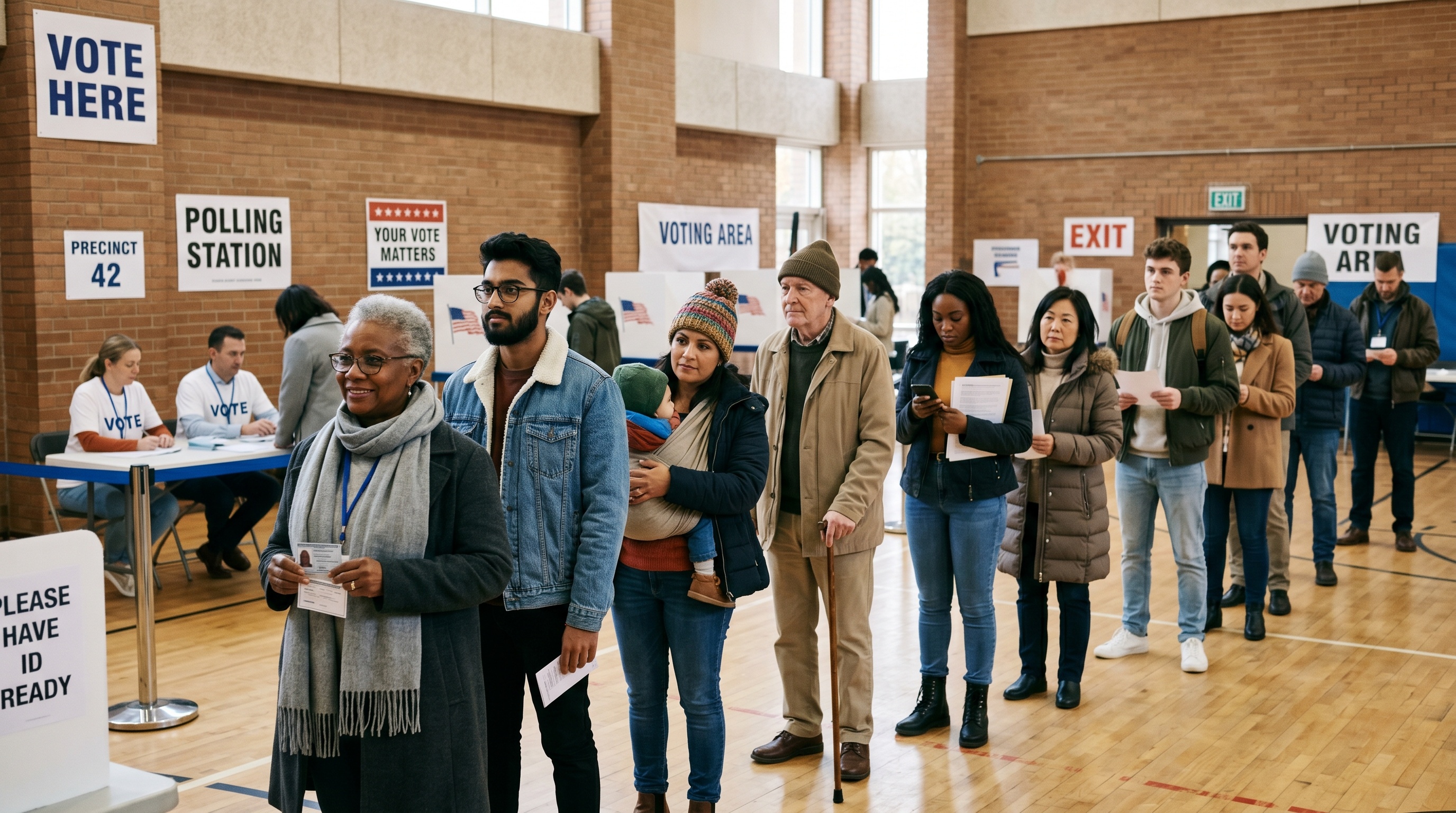
This is especially important for people who use supplemental oxygen.
You might assume that if you arrive at a polling place and see a long line, you’ll simply have to stand and wait like everyone else. But that’s not necessarily the case.
The Americans with Disabilities Act (ADA) protects the right of people with disabilities to have equal access to voting.
Under Title II of the ADA, state and local governments must provide people with disabilities a full and equal opportunity to participate in the voting process. This includes making reasonable modifications to policies and procedures when necessary.
A respiratory condition may qualify as a disability under the ADA if it substantially limits a major life activity, such as breathing. You do not have to use a wheelchair or have an obvious physical disability to be protected.
Can you request a chair if you cannot stand in line?
Yes! This is one of the most important accommodations to know about.
The Department of Justice specifically addresses long lines in its voting accessibility guidance.
For example, the DOJ explains that a voter who uses crutches and has difficulty standing in a long line should be provided with a chair while waiting.
The ADA does not automatically require poll workers to move every person with a disability to the front of the line. However, election officials must consider reasonable accommodations that allow people with disabilities to participate.
For an oxygen user who experiences shortness of breath, fatigue, or difficulty standing for extended periods, asking for a chair is a reasonable request to make.
Other accommodations you may be able to request
Depending on your needs and your polling location, accommodations may include:
- A chair while waiting: You should not have to stand for an extended period if your disability makes that difficult.
- A place to wait indoors: If extreme temperatures aggravate your respiratory condition, ask whether you can wait in a more comfortable location.
- Assistance from a companion: Federal law protects your right to have someone of your choosing help you with the voting process, subject to limited exceptions.
- Accessible voting equipment: Polling locations must provide accessible voting systems so voters with disabilities have an opportunity to vote privately and independently.
- Curbside voting: Some states and local election jurisdictions offer curbside voting for people who cannot easily enter the polling location. Availability and procedures vary, so check with your local election office.
What should you do if you need an accommodation?
Don’t be afraid to speak up. You have the right to ask for assistance.
- When you arrive, tell a poll worker that you have a disability and need an accommodation.
- Explain what you need. For example: “I use supplemental oxygen and cannot stand in line for an extended period. Is there somewhere I can sit while I wait?”
- If the first poll worker cannot help, ask to speak with the polling place supervisor or election judge.
- If your request is denied, contact your local election office for assistance.
You do not need to feel embarrassed about asking for an accommodation. These protections exist so that people with disabilities can participate in the voting process.
The Department of Justice specifically identifies seating and other reasonable modifications as ways election officials can accommodate voters with disabilities.
There is a page devoted to ADA guidelines and voting rights.
4. Prepare your oxygen equipment before leaving home
If you decide to vote in person, make sure your oxygen equipment is ready for the trip.
Even a relatively short outing can require more oxygen and energy than you anticipate, particularly if you encounter long lines or unexpected delays.
Here are some things to remember:
- Charge your portable oxygen concentrator: Start with a fully charged battery.
- Bring a backup battery: You don’t want to run out of power while waiting to vote.
- Bring your regular oxygen supplies: Pack any necessary tubing, cannulas, and accessories.
- Don’t change your prescribed oxygen settings: Continue using oxygen as directed by your healthcare provider.
- Dress for the weather: Cold temperatures, heat, and extreme weather can make breathing more difficult.
- Bring water: Staying hydrated can help keep you comfortable.
- Take your time: Allow extra time to get to the polling place and avoid rushing.
- Bring your charger and let election officials know if you need access to an outlet for charging.
If you use oxygen continuously, make sure you have enough battery capacity for the entire trip, including unexpected delays.
5. Plan your transportation and parking
Getting to the polling location can sometimes be just as challenging as waiting in line.
If walking long distances is difficult, check whether your polling place has accessible parking close to the entrance.
You may also want to:
- Arrange a ride with a family member or friend.
- Look into local transportation services for people with disabilities.
- Ask about accessible entrances and elevators.
- Check whether curbside voting is available.
- Have someone accompany you if you need assistance.
If you use a portable oxygen concentrator, remember to bring it with you even if you expect to be away from home for only a short time.
6. Don’t let a long line discourage you from voting
Sometimes, despite the best planning, you arrive at the polls and encounter a long line.
If this happens, remember a few important things:
- You can ask for reasonable disability accommodations.
- You can ask a poll worker where seating is available.
- You can ask whether curbside voting is an option.
- You can request assistance if you need help navigating the voting process.
- If you are already in line when the polls close, you generally have the right to remain in line and vote.
Most importantly, listen to your body. If you become unusually short of breath, dizzy, or feel unwell, don’t push yourself to remain standing. Ask for help and seek medical attention if needed.
Your health and safety always come first.
7. Know where to get help if your voting rights aren’t respected
If you encounter accessibility problems at a polling location, there are resources available to help.
Here are a few useful places to start:
- U.S. Department of Justice – Voting Rights: Information about federal voting rights and how to report potential violations.
- ADA.gov – Voting and Polling Places: Explains disability accommodations and accessibility requirements.
- U.S. Election Assistance Commission: Find your state election office and information about voting options.
- U.S. Election Protection Hotline: Call 866-OUR-VOTE (866-687-8683) for nonpartisan voting assistance.
Remember, state and local election rules can differ, so it’s always a good idea to check your local election office for specific procedures.
ADA.gov+2
Your vote matters, and your health matters, too!
Living with COPD or relying on supplemental oxygen doesn’t mean you have to give up your opportunity to participate in elections.
Whether you choose to vote by mail, take advantage of early voting, or head to the polls on Election Day, there are ways to make the process more comfortable.
Plan ahead, prepare your oxygen equipment, and don’t hesitate to ask for accommodations if you need them.
And remember: You don’t have to stand in a long line struggling to breathe just to exercise your right to vote.
Federal disability protections exist to help ensure that everyone has an equal opportunity to make their voice heard.
Take care of your lungs, take care of yourself, and make your vote count!




0 Comments